Spa Guest Feedback in Thailand: How to Track Therapist Performance Without Micromanaging
Learn how to build fair therapist feedback systems for Thai spas. Anonymous feedback methods that respect face-saving culture while improving service quality.
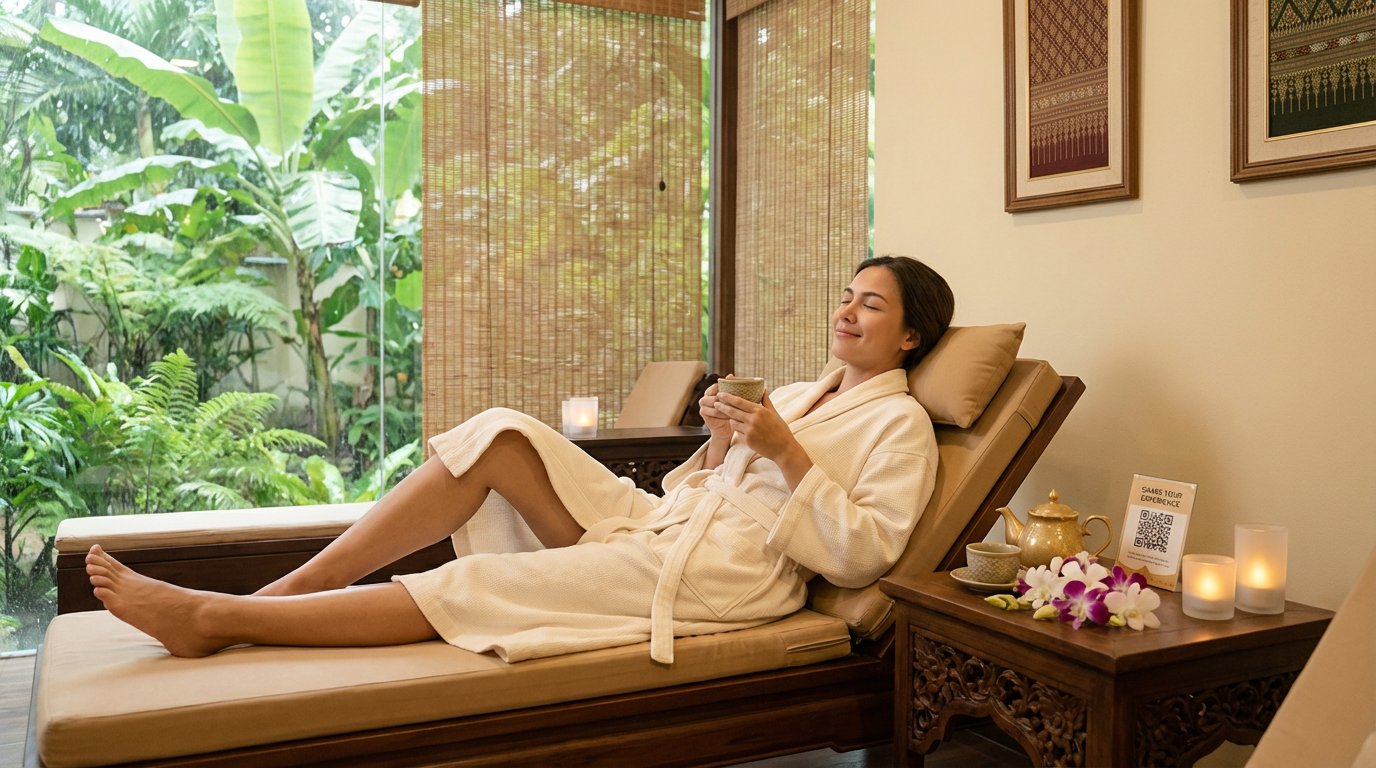
A guest walks out of your spa feeling relaxed and thankful. They smile at reception, thank the therapist, and leave without a complaint. Two days later, a detailed TripAdvisor review shows up: “The massage was disappointing. The therapist seemed distracted and rushed through the treatment.”
This scenario happens every day in Thai spas. The difference between what guests say in person and what they write online reflects a cultural norm that complicates traditional performance tracking. Guests avoid direct criticism to keep harmony. Staff members resist individual feedback that feels like public judgment.
The solution is to create systems that respect Thai cultural values. This includes anonymous channels for honest input, fair frameworks that support therapists’ growth rather than punish them, and feedback methods that enhance service without harming team spirit.
Why Therapist Performance Drives Spa Reviews
Thailand’s spa industry is still growing rapidly. According to the Thai Spa Association, the spa sector increased by 9.4% in 2024, reaching USD 1.598 billion (approximately THB 55.93 billion). The Global Wellness Institute ranks Thailand 24th globally for health services, with wellness tourism bringing in THB 670 billion each year.
Research consistently shows that therapist performance is the main factor influencing guest satisfaction. Studies in the Journal of Hospitality and Tourism Insights found that the relationship between guests and therapists directly affects trust, commitment, and the likelihood of return visits.
Key research findings:
- Therapist expertise builds trust: Guests who view their therapist as skilled are much more likely to return.
- Likability enhances relationship quality: Therapists who connect well with guests lead to greater satisfaction.
- Service delivery matters more than outcomes: How the treatment is given is more important than the final result.
Assessment of customer satisfaction on spa services includes two elements: service satisfaction and outcome satisfaction. The spa experience depends on factors such as the skills of therapists and the understanding of customer needs.
The Thai Cultural Challenge: Face-Saving and Feedback
To understand why traditional feedback methods fail in Thailand, you need to grasp kreng jai. This cultural concept emphasizes being considerate of others’ feelings and avoiding embarrassment.
Why Guests Avoid Direct Complaints
Some guests, especially tourists, may provide direct feedback. However, most tend to avoid confrontation. Cultural or language differences, or simply being a guest in an unfamiliar place, make complaints or honest feedback to staff quite rare.
What guests say: “Everything was fine, thank you.”
What guests mean: “The pressure was too light and my therapist seemed distracted, but I don’t want to cause problems.”
Research on guest behavior shows that guests often refrain from complaining directly to management. Instead, they prefer to share negative experiences through word of mouth or online reviews, where they can remain anonymous and escape the social cost of criticism.
Why Staff Resist Individual Criticism
The face-saving dynamic goes both ways. Workplace culture stresses that public criticism, even if meant to help, can be uncomfortable and disrespectful.
How Feedback Feels to Staff
- Exposure of personal weaknesses to others
- Loss of face among colleagues
- Feeling unfairly singled out based on a guest's mood
- Being judged without context
What Directors Intend
- Identify areas for improvement
- Recognize top performers
- Foster team skills
- Address recurring problems
Research on spa therapist motivations highlights factors that contribute to job satisfaction: strong open relationships, measurable rewards, fulfilling work beyond just money, and opportunities for advancement. Traditional punitive performance tracking threatens all of these aspects.
Building a Fair Therapist Feedback System
To create effective systems, you need to move away from punitive performance reviews in favor of developmental frameworks.
Questions That Get Honest Answers
The design of surveys greatly affects the quality of responses. Research on survey completion shows that surveys starting with multiple-choice questions achieve completion rates of 89%.
Questions that work:
- “How would you rate your overall treatment experience?” (1-5 scale)
- “How attentive was your therapist to your comfort?” (1-5 scale)
- “Would you request this therapist again?” (Yes/Maybe/No)
- “What could have made your experience even better?” (optional text)
Questions that fail:
- “Rate your therapist’s technique” (feels like grading and triggers guilt)
- “Did your therapist make any mistakes?” (culturally uncomfortable)
- “Name one thing your therapist should improve” (puts the guest in a critic’s role)
Experience Rating
Start with overall satisfaction—a low-stakes question that eases respondents in.
Therapist Attentiveness
Focus on care and attention since guests feel qualified to judge if they were cared for.
Return Intent
"Would you request this therapist again?" captures loyalty without needing direct criticism.
Optional Improvement
"What could improve it?" frames feedback as aimed at future improvements instead of past faults.
Balancing Individual vs. Overall Feedback
Collection approach:
- Therapist-specific feedback should be collected right after the treatment (QR code in the relaxation area)
- Overall spa experience feedback can be gathered through post-stay surveys
- Keep surveys under 90 seconds
Analysis approach:
- Aggregate monthly therapist scores (at least 10-15 responses before drawing conclusions)
- Compare individual therapist scores to spa-wide averages
- Track patterns over time rather than reacting to isolated responses
Using Feedback for Coaching, Not Punishment
Punitive Approach (Fails)
- "Your scores dropped this month."
- "Three guests complained about you."
- Publicly posting individual scores
- Linking feedback to immediate pay
Developmental Approach (Works)
- "Let's explore opportunities for growth."
- "Some guests mentioned needing deeper pressure—let's practice that."
- Private one-on-one coaching sessions
- Development plans with support and training
Research from ISPA shows that progressive spas have moved away from traditional numerical rating systems. The Spa at Cliff House replaced ratings with quarterly goal-focused meetings. The outcome: employees “really love it. It boosts engagement and fosters pride, personal growth, and achievement.”
What Questions Predict Spa Repeat Visits
Not all feedback questions have the same impact. Focus on research-backed factors that drive return visits.
Sample Survey Structure
Timing: 15-30 minutes after the treatment (while the guest is in the relaxation area)
Delivery: QR code on a card provided with tea service
Length: Under 90 seconds to complete
| Question | Type | Purpose |
|---|---|---|
| Overall treatment experience | 1-5 scale | Main measure of satisfaction |
| Therapist attentiveness | 1-5 scale | Indicator of service quality |
| Treatment room environment | 1-5 scale | Check on operational quality |
| Request this therapist again? | Yes/Maybe/No | Predictor of loyalty |
| What could enhance your experience? | Optional text | Provides actionable feedback |
Placement Strategy
Best placement:
- Small tent card in the relaxation/tea area (post-treatment)
- Card included with checkout documentation
- Follow-up SMS/LINE message 2-3 hours after the visit
Avoid:
- Treatment rooms (interrupts the experience)
- Reception desk (rushed exit)
- Pre-treatment (nothing yet to evaluate)
For detailed implementation, see QR Codes for Guest Feedback: Complete Implementation Guide.
Connecting Spa Feedback to Hotel Rating
For hotel spas, the individual performance of the spa affects the hotel’s overall review rating.
Research from Cornell University on hotel reviews applies directly to spa operations. A spa generating complaints can lower the hotel’s average rating, impacting bookings across all room types.
Cross-Functional Feedback Routing
Spa feedback often uncovers issues beyond the spa director’s control:
- “I couldn’t get my preferred time”: Issues with the reservation system or staffing
- “The changing room was outdated”: Needs for capital investments
- “Nobody mentioned the spa at check-in”: Gaps in front desk training
Route this feedback to the right decision-makers instead of letting it sit in only spa reports.
Implementation Framework
Week 1-2: Design & Setup
Create a survey with proven questions. Generate QR codes. Brief the team on the purpose: development, not punishment.
Week 3-4: Soft Launch
Introduce in the relaxation area only. Collect baseline data. Identify issues and adjust based on responses.
Week 5-8: Full Deployment
Expand to all touchpoints. Establish a monthly review system. Start coaching discussions.
Ongoing
Monthly trend analysis, quarterly development planning. Publicly celebrate improvements and address concerns privately.
Success Metrics
| Metric | Target | Why It Matters |
|---|---|---|
| Response rate | 25-35% | Higher than post-visit email (5-15%) |
| Completion rate | 80%+ | Indicates appropriate survey length |
| ”Request again” positive | 85%+ | Key indicator of loyalty |
| Score variance | Decreasing | Shows coaching effectiveness |
For deeper understanding of satisfaction metrics, see NPS, CSAT, and CES Explained.
Frequently Asked Questions
How do I get honest feedback without embarrassing therapists?
What response rate should I expect from post-treatment surveys?
How do I handle consistently low scores for a specific therapist?
Should I share individual therapist scores with the team?
How much feedback before drawing conclusions about a therapist?
Ready to create a fair, effective therapist feedback system? GuestMetrix helps Thai spas gather anonymous guest feedback, monitor therapist performance trends, and improve service quality without hurting team morale. Start your free 60-day pilot and discover how structured feedback can transform spa operations.
Related Articles
- Thailand Hospitality Challenges 2025 - Market context for Thai wellness tourism
- How to Prevent Bad Hotel Reviews - The 3-step framework for in-stay feedback
- QR Codes for Guest Feedback Guide - Technical implementation
- NPS, CSAT, and CES Explained - Choosing the right metrics
Sources
- Thai Spa Association - Wellness Tourism Growth
- Nation Thailand - Health Tourism Revenue
- Asia News Network - Thailand Wellness Economy
- Journal of Hospitality and Tourism Insights - Visitor-Therapist Relationship
- ScienceDirect - Spa Therapist Work Motivations
- Rivermate - Thailand Cultural Considerations
- Cornell University - Hotel Reviews and Revenue
- ISPA - Performance Review Best Practices
Tags
Ready to improve guest satisfaction?
Start your free 60-day pilot program today. No credit card required.