Thailand Hotel Industry 2025: Navigating Declining Arrivals and Rising Competition
Thailand faces a 7.5% drop in tourist arrivals through September 2025, with Chinese visitors down 34%. Regional data shows Bangkok oversupply pressure, Phuket resilience, and what properties can do now.
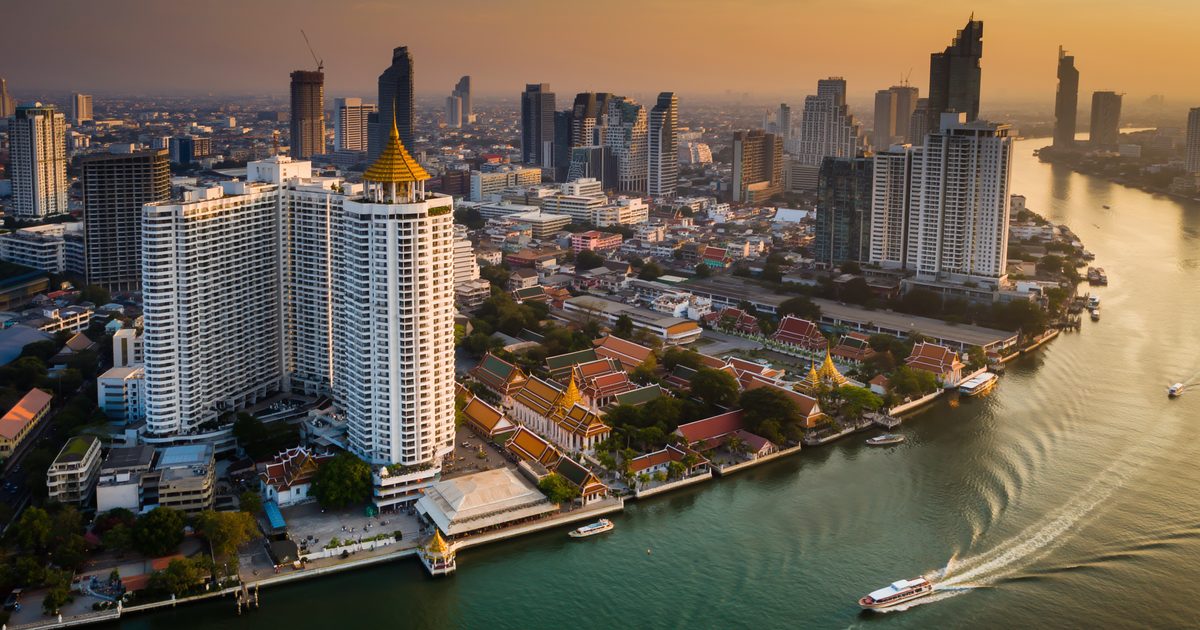
Thailand’s Tourism Authority of Thailand (TAT) initially forecast 39 million international arrivals for 2025. By mid-year, that target dropped to 36.5 million. The latest projections? Just 33.16 million visitors—representing a 7% year-on-year decline.
For hotel operators across Bangkok, Phuket, Chiang Mai, and beach resort destinations, these aren’t just statistics. They’re occupancy forecasts, rate decisions, and staffing budgets that need revision. The Chinese market collapse, regional competition intensifying, and persistent staffing shortages compound the challenge.
Yet performance varies dramatically by market. While Bangkok hotel occupancy fell 3.7 percentage points in the first half of 2025, Phuket posted 79.5% occupancy with ADR up 7.8%. Understanding which markets face pressure—and which strategies actually work—determines who maintains profitability this year.
The Arrival Decline: What the Data Shows
Through September 30, 2025, Thailand recorded 24,115,328 international tourist arrivals—down 7.56% from the same nine-month period in 2024, according to official TAT data. The revised full-year forecast of 33.16 million arrivals represents a meaningful correction from earlier optimism.
Revenue figures tell a slightly less dire story. In the first four months of 2025, arrivals declined just 0.26% while tourism revenue increased 5.24% to 576.85 billion baht—indicating a shift toward higher-spending travelers. TAT’s strategic pivot to emphasize “value over volume” through its “The New Thailand” positioning acknowledges this reality.
For properties competing primarily on price to fill rooms, this shift carries implications. The volume game becomes harder; the premium positioning game becomes more viable.
The China Problem
China remains Thailand’s top source market by volume—but barely. Through August 2025, Chinese arrivals totaled 2.84 million compared to Malaysia’s 2.79 million. By some measures, Malaysia has already overtaken China as the largest source market.
The 34.2% decline in Chinese arrivals compared to pre-pandemic 2019 levels reflects multiple factors, according to Nation Thailand analysis:
- Safety perception issues: High-profile scam network incidents involving Chinese tourists damaged Thailand’s reputation in Chinese media
- Currency headwinds: The baht strengthened 8% against the USD between May-September, making Thailand relatively more expensive
- Regional competition: Japan benefited from a 15% yen depreciation, becoming the top Chinese outbound destination
- Domestic promotion: China’s aggressive domestic tourism push diverted potential outbound travelers
Chinese tour groups historically booked predictable room blocks months in advance. Malaysian visitors book shorter stays with different patterns. Russian visitors (1.14 million through August) and Indian travelers (1.43 million) have different service expectations and spending behaviors.
Revenue management systems calibrated for 2019 Chinese booking patterns require recalibration.
Bangkok: Oversupply Meets Demand Weakness
The Supply Surge
Bangkok leads the Asia-Pacific region in hotel development pipeline, with 68 projects representing 16,641 rooms in various stages of development. Major 2025 openings include Aman Nai Lert Bangkok (April), Andaz One Bangkok (Q4), voco Bangkok Surawong (Q4), and multiple Radisson properties.
Knight Frank reported that Bangkok hotel occupancy fell to 75.1% in the first half of 2025, down 3.7 percentage points year-on-year. ADR reached THB 4,260—modest growth that barely outpaces inflation.
The oversupply hits mid-market and economy segments hardest. Luxury properties command rate increases; budget and mid-tier properties compete on price while absorbing higher operating costs.
What the Data Actually Shows
STR data for April 2025 indicated “modest ADR declines and more significant occupancy declines” in Bangkok. Contributing factors include:
- Expanding hotel supply absorbing demand growth
- Shorter average length of stay
- Growing share of regional travelers with lower per-trip spending compared to long-haul markets
- Sharp 35% decline in Chinese arrivals in H1 2025
With 3,283 new keys launching before year-end 2025, the absorption challenge intensifies.
Rate Pressure Reality
When 60,000+ hotel rooms compete in Bangkok and new supply continuously enters the market, rate cuts cascade. A competitor drops rates 30%; OTAs promote those lower rates; rate parity pressure forces matching.
Properties maintaining rates in this environment share operational characteristics: strong review profiles, direct booking channels capturing higher-margin reservations, and operational efficiency that preserves margins when ADR growth stalls.
Phuket: Strong Performance Despite Headwinds
Phuket presents a markedly different picture. The destination recorded 79.5% occupancy in H1 2025 with ADR of THB 5,652—up 7.8% year-on-year. January occupancy reached 91.8%, exceeding pre-pandemic performance levels.
Luxury segment performance particularly stands out: Phuket luxury hotels achieved ADR and RevPAR levels 37.3% and 31.7% above 2019 benchmarks in H1 2024, with that momentum continuing into 2025.
STR reported that Phuket and Southern Thailand “posted positive RevPAR with ADR being the primary driver” in April 2025—a notable contrast to Bangkok’s performance.
The Supply Pipeline
Phuket ranks third in Asia-Pacific for hotel pipeline, with 40 projects representing 10,194 rooms. Key 2025-2026 openings include:
- Courtyard by Marriott Phuket Chalong Bay (Q3 2025)
- Radisson Resort Phuket Mai Khao Beach (2025)
- Hampton by Hilton Phuket Town (Thailand’s first Hampton)
- InterContinental Phang-Nga Bay Resort (2028)
Unlike Bangkok where supply exceeds demand absorption capacity, Phuket’s resort positioning and international leisure demand provides better fundamentals for absorbing new inventory—though not without rate pressure risk.
Competitive Positioning Challenge
“Beautiful beach resort” no longer differentiates. Vietnam’s Da Nang and Phu Quoc invest heavily in resort infrastructure. Cambodia’s coastal developments target the same market segment. Direct flights, lower operating costs, and aggressive positioning create genuine alternatives.
All but three countries—China, Singapore and Thailand—experienced RevPAR gains in April 2025, with regional competition for leisure travelers intensifying across Southeast Asia.
When travelers research beach resort vacations, they compare across destinations. Online reviews become the primary differentiator once location, amenities, and price achieve rough parity. Properties with 4.5+ ratings on major booking platforms command occupancy and rate premiums that those with 3.8 ratings cannot match.
Regional Performance Snapshot
Destination Performance Comparison (2024-2025 Data)
Outperforming Destinations
- Phuket: 79.5% occupancy, ADR up 7.8%
- Koh Samui: ADR growth 9.2% (2024), April 2025 up 21%
- Pattaya: 71% occupancy, ADR up 6.3% in 2024
- Krabi: Occupancy up 13.2% year-on-year (2024)
Challenged Destinations
- Bangkok: Occupancy down 3.7pp to 75.1%
- Chiang Mai: Early 2025 occupancy down 15-20%
- Chiang Mai: Chinese arrivals down 50-60% after Myanmar earthquake
- Central/North Thailand: Modest ADR declines per STR
Pattaya: The Surprise Performer
Pattaya recorded 71% occupancy in 2024 with 4.7% year-on-year growth, while ADR climbed 6.3% to THB 3,498. The Thai Hotels Association forecasts 80-85% occupancy during high season, with some properties reporting rate increases approaching 20%.
The driver: European arrivals—particularly Russian, German, and British visitors—now surpass pre-pandemic levels. Combined with consistent weekend traffic from Bangkok, this provides stable base demand.
Chiang Mai: Tale of Two Strategies
Chiang Mai presents mixed signals. The destination posted 15.1% occupancy growth in 2024—the highest increase among major Thai destinations. Then 2025 began.
Early 2025 occupancy dropped 15-20%. The March 2025 Myanmar earthquake triggered a 50-60% decline in Chinese arrivals to Chiang Mai specifically. Properties heavily dependent on Chinese tour group business struggled.
Properties with clear positioning outperform market averages: wellness retreats attract year-round guests with longer stays; co-working hotels tap digital nomad demand; properties offering distinctive authentic experiences continue drawing visitors.
Koh Samui: The Luxury Leader
Koh Samui leads Thai destinations in ADR growth—9.2% year-on-year in 2024, with April 2025 posting a remarkable 21% increase. European travelers account for 56% of arrivals, providing stable high-value demand.
New supply enters the luxury segment: Nivata Koh Samui (Tapestry by Hilton) opens Q4 2025, with SO/ by Sofitel following in 2026. For independent properties, this means global brands with substantial marketing resources and standardized service protocols enter the competitive set.
The independent property advantage: knowing individual guests better than brands can—which requires systematic feedback capture and operational response capability.
The Workforce That Isn’t Coming Back
According to the Tourism Council of Thailand, 36% of hospitality businesses closed during Q2 2021, with an estimated 550,000 jobs lost in that quarter alone. More than 1 million jobs were lost in 2021, reducing the labor force from 6.27 million (2019) to approximately 3.34 million.
The workers who left hospitality largely haven’t returned. Many found positions in other industries with better work-life balance, more predictable hours, and comparable or better compensation. The perception of hospitality as requiring “very long working-hours and low wages” deters new graduates who increasingly prefer tech-adjacent fields.
The Math Doesn’t Work
Thailand’s tourism recovery trajectory suggests the country will need 9 million travel and tourism employees by 2025—up from 5.4 million currently. That represents a 40% increase in workforce requirements.
Where do these workers come from? Hospitality education programs can’t scale that quickly. Immigration policy restricts foreign labor in most guest-facing roles. Wage increases help retention but squeeze margins in oversupplied markets.
The World Travel & Tourism Council warns that global demand for travel and tourism workers will exceed supply by more than 43 million by 2035, with the hospitality industry specifically facing an 8.6 million worker gap (18% below required staffing levels).
How Properties Adapt
Rather than attempting to restore 2019 staffing levels, properties adjust operational models:
Multi-skilled teams replace specialists. Cross-training enables front desk staff to provide basic F&B coverage during peak periods, housekeeping supervisors to handle guest service requests, concierge to assist with check-ins.
Automation increases. Feedback collection, routine communications, service request management—processes that don’t require human judgment get systematized. This preserves staff capacity for high-touch interactions that build loyalty.
Retention becomes critical. Replacing an experienced front desk manager costs 3-6 months of salary when accounting for recruitment, training, and lost productivity. Properties that retain institutional knowledge outperform those with high turnover.
Why Guest Feedback Systems Matter Now
When arrivals decline, supply increases, and operational margins tighten, every guest interaction carries higher value. The math is straightforward: with fewer guests available, conversion rates and repeat visit rates matter more.
The Review Economy
Research consistently shows that 80%+ of travelers read reviews before booking, with the average traveler reading 6-12 reviews per decision. For resort properties where guests plan vacations rather than grabbing overnight business accommodations, review profiles become primary decision factors.
One data point illustrates impact: 86% of travelers report they will pass on a good deal from a hotel with unattended negative reviews. When Bangkok properties compete against 60,000+ rooms, or Phuket resorts compete against Vietnam and Cambodia alternatives, review scores directly impact booking conversion rates.
The Silent Majority Problem
For every guest who directly complains to staff about an issue, research suggests approximately 26 others experience problems but stay silent. Cultural factors in Asian markets where direct confrontation is less common compound this dynamic.
These silent guests check out with polite smiles, provide no negative feedback to staff—and then write detailed negative reviews once home. Properties never get the chance to address problems before they become public review content.
Post-Checkout Feedback Limitations
Post-checkout email surveys typically achieve 5-15% response rates. Respondents skew toward extremes: very satisfied guests or very dissatisfied guests. The valuable middle ground where actionable operational feedback lives goes largely uncaptured.
More critically, post-checkout feedback arrives too late. The guest has departed. If they experienced problems, those problems can’t be addressed. The negative review may already be posted.
Mid-stay feedback captured while guests remain on property enables service recovery. Research shows guests who experience problems that get resolved quickly often become more loyal than guests who never had problems—but only if issues surface during the stay when resolution remains possible.
What Properties Are Actually Doing
Properties that maintain occupancy and rate performance in oversupplied markets share common operational approaches:
Real-Time Feedback Capture
QR codes placed in guest rooms, restaurants, pool areas, and checkout counters enable instant feedback. Mobile-first design matters: over 80% of internet usage in Thailand occurs on mobile devices.
Effective mid-stay feedback systems share characteristics:
- Short surveys (under 2 minutes completion time)
- Bilingual options (Thai and English minimum; Russian, Chinese for relevant markets)
- Anonymous channels that reduce cultural reluctance to provide critical feedback face-to-face
Properties using mid-stay QR code feedback report response rates of 25-35%—dramatically higher than 5-15% post-checkout email survey rates.
Speed of Response
A guest complaint addressed three hours after submission often arrives too late. The guest has mentally checked out, possibly already begun drafting their review.
When guests report problems and see resolution within 30 minutes, conversion rates improve. The service recovery window is small—measured in minutes, not hours.
This requires instant notification systems that route issues to appropriate staff immediately: housekeeping issues to housekeeping supervisors, F&B problems to restaurant managers, maintenance issues to engineering teams. Email-based systems with daily batch reviews fail to meet speed requirements.
Portfolio-Level Visibility
For operators managing multiple properties—whether regional portfolios across Thailand or properties in different market segments—consolidated visibility drives proactive management.
Which property shows declining satisfaction scores? Where do recurring issues indicate systemic operational problems? How does one property’s performance compare to similar properties?
Without portfolio-level dashboards, management remains reactive. Trends get identified after occupancy drops rather than before.
Direct Booking Channel Development
OTA commissions of 15-25% particularly damage margins when ADR growth stalls. Every direct booking captured represents margin preserved.
Strong review profiles support direct booking conversion. When travelers research properties and see consistently positive recent reviews, they’re more willing to book direct rather than requiring the perceived safety of OTA booking.
Frequently Asked Questions
What are the current tourist arrival numbers for Thailand in 2025?
How much have Chinese tourist arrivals declined?
Which Thai destination is performing best for hotels in 2025?
What is the hotel staffing situation in Thailand?
How can Thai hotels compete when there's so much new supply?
Want to capture actionable guest feedback while guests are still on property? GuestMetrix provides QR code-based feedback systems with instant alerts, multilingual support, and portfolio-level visibility designed for Thai hospitality operators. Start your free 60-day pilot and see how real-time feedback prevents negative reviews before they’re posted.
Related Resources
- How to Prevent Bad Hotel Reviews Before They’re Posted - The operational framework for capturing and acting on mid-stay feedback
- QR Codes for Guest Feedback: Complete Implementation Guide - Step-by-step setup for hotels, restaurants, and spas
Sources and Data
This analysis draws on official statistics and industry data from multiple sources:
- Thailand foreign tourist arrivals fall 7.5% in first 9 months - Nation Thailand, October 2025
- Thailand welcomes 12.09 million foreign tourists in first 4 months - Nation Thailand, May 2025
- Chinese tourist numbers plummet, Malaysia overtakes Thailand - Nation Thailand, August 2025
- Asia Pacific hotel performance update - April 2025 - STR Global
- Hotel Market 1H 2025: Bangkok & Phuket - Knight Frank via Hotel Conversation
- Pipeline new hotel in Thailand - Teawlataem Industry Analysis
- Is Thailand facing a labour shortage in hospitality & tourism? - Bangkok Post
- Hospitality industry workforce shortfall forecast - World Travel & Tourism Council via Hotel Dive
Tags


Ready to improve guest satisfaction?
Start your free 60-day pilot program today. No credit card required.